A letter from the meadow - the power of a word
Dear friend,
There’s a moment, a few years into living on the land, when something shifts.
No one warns you about it. It arrives quietly, like dusk: soft at first, then suddenly you realise you’re standing in the half-light.
When we first arrived here, everything felt full of promise.
The first native seedlings pushing through.
The goats settling in.
The evenings when the river caught the light just so and the world felt almost holy.
People imagine that tending land must always feel like that.
But the truth — the real truth — is far more complex.
It’s beautiful, yes, but also tiring, repetitive, and deeply humbling.
We’ve never quite known the right word for what we do.
Land carers.
Stewards.
Hobby farmers.
People doing our best with a small patch of ground.
Whatever the name, we are learning every day.
And learning, I’ve discovered, is the most humbling part of all.
A few weeks ago we hosted a workshop here. Over morning tea, a friend — someone who owns a few large properties — told me she spends more than sixty plus hours a month hand-weeding. Sixty hours. She loves her land fiercely, but the weeds had worn her down.
She found herself questioning it all — the effort, the cost, the relentlessness.
Her honesty stayed with me. Because this year — especially in the last two months — weeds have become the centre of our evenings here at Riverdale.
Wire weed.
Horehound.
Three-corner jacks.
Weeds that seem to appear out of nowhere, daily, with an almost comic arrogance.
Most nights, it’s boots on, gloves on, bending, pulling, sweating, and heaping them into piles.
You clear one patch and turn around to see another waiting.
Some evenings it feels almost futile.
I don’t write this to moan — far from it.
I write it because this is the part of land care no one really talks about.
The constancy.
The relentlessness.
The quiet emotional weight of seeing everything so clearly all the time.
Because living closely with land turns your senses up in ways you can’t undo.
You notice the way plants lean in the heat.
The shift in bird calls at dawn.
The thirst of the soil long before the cracks appear.
You catch the faintest tracks in the dust — kangaroo, fox, possum — and feel a tug of responsibility you didn’t ask for but now can’t ignore.
Some days it’s overwhelming, this porousness, this awareness of every living thing.
A few weeks ago, on a hot, sticky afternoon, James and I were out in one of the old paddocks, pulling weeds that just refused to quit. We were both tired. Dusty. A bit defeated.
Then James looked up, took a slow breath, and said,
“Simon, maybe stop calling this a paddock. Look at it. This is a meadow.”
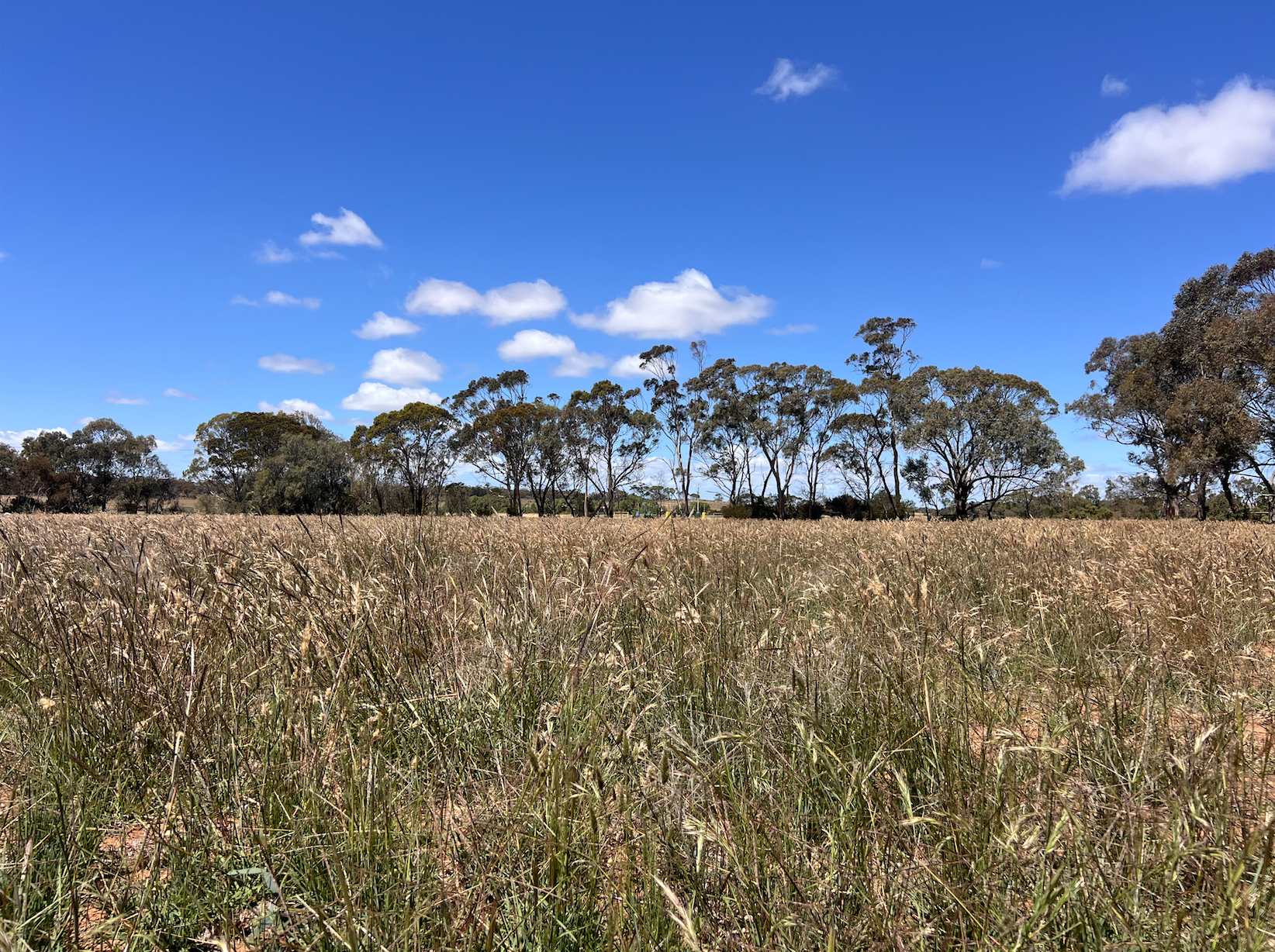
One of the meadows
A meadow.
One word, and the whole place softened.
One word, and something shifted in me.
I looked up properly then — really looked — and saw what he saw.
Native grasses moving like water.
Seed heads catching the low sun like lanterns.
Life returning, quietly, stubbornly, beautifully.
Not a paddock defined by what was wrong.
A meadow defined by what was possible.
That single word gently moved me back into gratitude.
It helped me see that restoring land isn’t about winning or finishing —
it’s about staying in relationship with a place long enough for it to change you.
This work is enormous.
It asks more of you than you think you have.
But it also gives back in moments that feel like grace:
a breeze through native grasses,
a bird returning after months away,
a friend admitting her own overwhelm,
a partner offering a word that reframes everything.
So if you’re somewhere in that middle place —
tired, hopeful, committed, questioning —
I want to say:
I see you.
This work is big, yes, but so is the beauty threaded through it.
And sometimes, all it takes
is one small, tender word
to remember why you began.
With a grateful heart,
Simon
Make it stand out
