
The birds that keep a calendar
On the morning of 6 October I don’t need a calendar.
I need to stand still by the river and listen.
Somewhere overhead comes a rolling, liquid trill, prrrp, prrrp. Then a flash of turquoise, copper and gold drops out of the sky and plucks a dragonfly mid-air.
The rainbow bee-eaters are back. They always are, on this exact day.
Since we arrived, we’ve spent years restoring this land, coaxing back the grassy woodland that once grew here. I’ve never been sure why the bee-eaters choose us, but each year they do, it feels like the land is answering back.
Here’s the funny thing. I didn’t notice them at first.
Years ago, Sue and Alan from Birds SA came out to do a bird count. I tagged along between jobs, half-listening, until Sue turned her camera around to show me a photo. All that colour, glowing in the light.
“Where did you see that one?” I asked.
She gave me that look. “Here. That’s from your place.”
I still think about that. Something this extraordinary had been living alongside me, and I’d walked straight past it. That’s how it starts, I reckon. Not with knowing. With noticing.
6 October is the date has become a quiet feast day at Riverdale. I don’t plan around much out here. There’s always something leaning or broken or ready to bolt. But that morning I keep clear. I take my tea down to the river, and I wait.
Think about the journey for a moment.
These birds have wintered in Papua New Guinea. Thousands of kilometres of ocean and coastline and red dirt. No map. No phone. No one telling them it’s time. Something in them, the lengthening days and the turn of the season, says go. And they land here, on Peramangk Country, by the Bremer, on the same day every year.
I can barely remember what I had for breakfast.
They’re not delicate travellers either. Bee-eaters eat exactly what the name promises: bees and wasps, caught on the wing. They carry them to a perch and whack them against the branch until the sting is gone. Then they dig nesting tunnels into soft, sandy banks, working the soil with their beaks and feet.
Small, bright, and absolutely nobody’s fool.
Rewilding is slow work. Most of the time you can’t see it happening. You plant, you burn, you seed, you wait. You lose trees to drought. You walk the paddocks wondering if any of it is working.
Then, one morning in October, the sky answers.
I know it isn’t really about us. They’d come whether we were here or not. They don’t need us. Not really.
But I’ve stopped thinking of their return as a coincidence of geography. I’ve started thinking of it as a conversation. Each year that a migrant chooses this patch of earth, it’s a small vote of confidence in the ground beneath it: the insects, the river, the grasses we’re trying to bring back. A message from something much older and wiser than my to-do list.
Here is the thing that keeps me humble. They keep a better calendar than I do. They know when to leave, and when to arrive. When to rest, and when to build.
I’m still learning all of that.
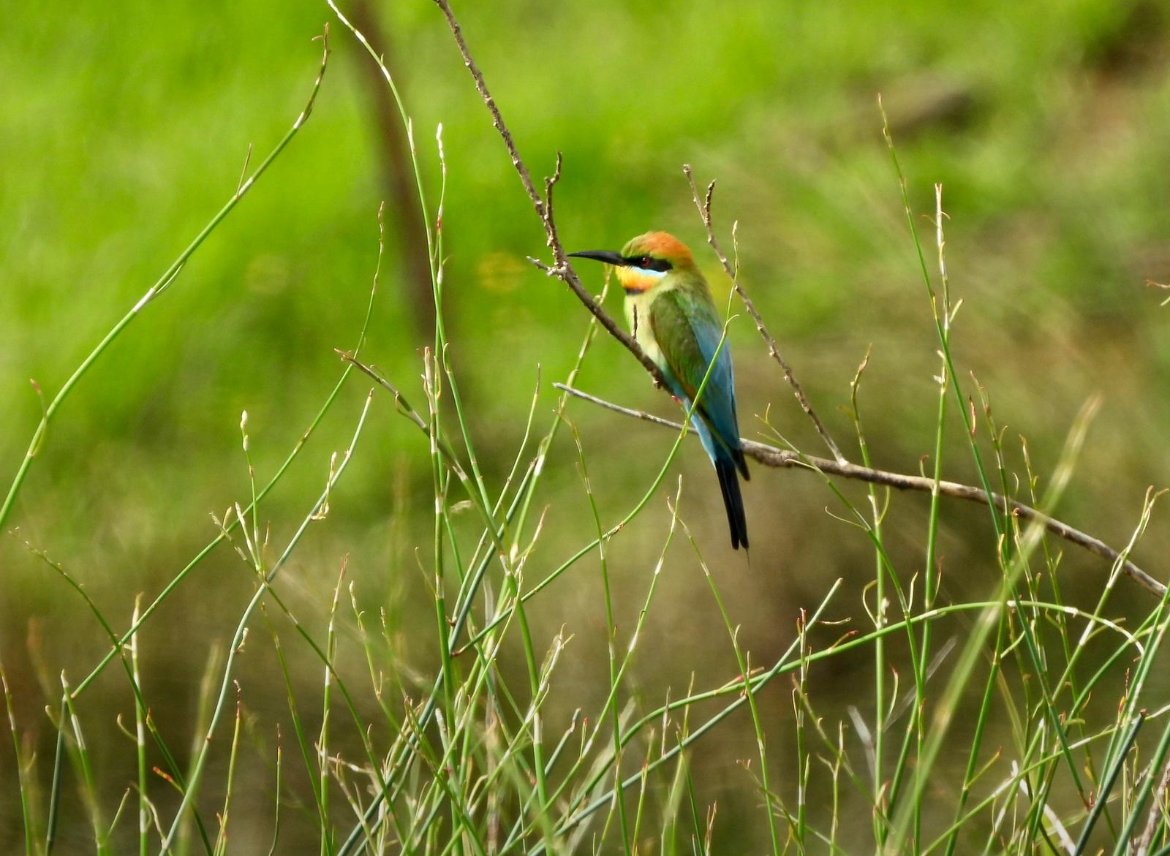
Rainbow bee-eater by the river
